Many of you already know this. But it’s worth repeating: Too many are still treating the website like a digital brochure.
It lists products.
It shows specifications.
There is a case study or two.
Contact info and maybe an About section.
And that’s it.
But the role of the website has changed dramatically. And the reason…
…the reason is generational.
Millennials and Gen Z now make up the majority of B2B buyers. These buyers research differently, evaluate vendors differently, and often complete most of their buying journey before ever speaking with sales.
For B2B, that shift changes everything.
Because if your website cannot clearly communicate what you do and why it matters, you may never even make the buyer’s shortlist.
The Buyer Has Changed
The demographics of B2B purchasing have shifted quickly.
Research from Forrester and other analysts shows:
- Millennials and Gen Z account for 64 to 71 percent of B2B buyers
- Millennials influence 73 percent of B2B purchasing decisions
- In deals larger than $1 million, 67 percent of buyers are Millennials or Gen Z
Sources
- Forrester B2B Buying Study
- Data Axle B2B Generational Insights
- Red Branch Media B2B Buying Research
These buyers grew up researching everything online. Hotels. Cars. Software. Travel.
They expect the same experience when researching suppliers.
Which means the first place they go is not your sales team.
It is your website.
Most of the Buying Journey Happens Before Sales
If you work in B2B, it often feels like the buying process begins when someone fills out a form or asks for a demo.
In reality, it starts much earlier.
Research shows:
- Buyers are 70 to 80 percent through their buying process before contacting vendors (Forrester)
- 70 percent of buyers fully define their needs before speaking with sales (6sense)
- 81 percent of buyers already have a preferred vendor before reaching out (Corporate Visions)
- And Gartner’s research indicates that 75% of B2B buyers prefer a rep-free experience
Let’s hang on to those points for a minute.
By the time someone contacts you, they have already:
- Visited multiple websites
- Compared competitors
- Read about applications
- Researched solutions
Your website has already been selling for you.
Or has it been silently losing the opportunity?
The Hidden Issue: Product Awareness
There is another challenge many companies face – especially in the manufacturing space. And that is a product awareness problem.
Inside the organization, everyone understands the product lines.
Sales understands the applications. Engineering understands the technology.
Leadership understands the value.
But buyers do not.
In many industries:
- Buyers search by problem, not by product
- Buyers search by application, not by brand
- Buyers search by process improvement, not by feature
If your website cannot connect those dots, your buyers may never realize you are the right solution.
A strong website helps explain complex products clearly. It helps connect products to real operational challenges. And it can demonstrate how solutions improve efficiency or output
This is not only building product awareness. It’s also creating product understanding. And that = increased sales.
Example: Manufacturing Product Awareness in Action
Manufacturers have faced this challenge. Below are two examples.
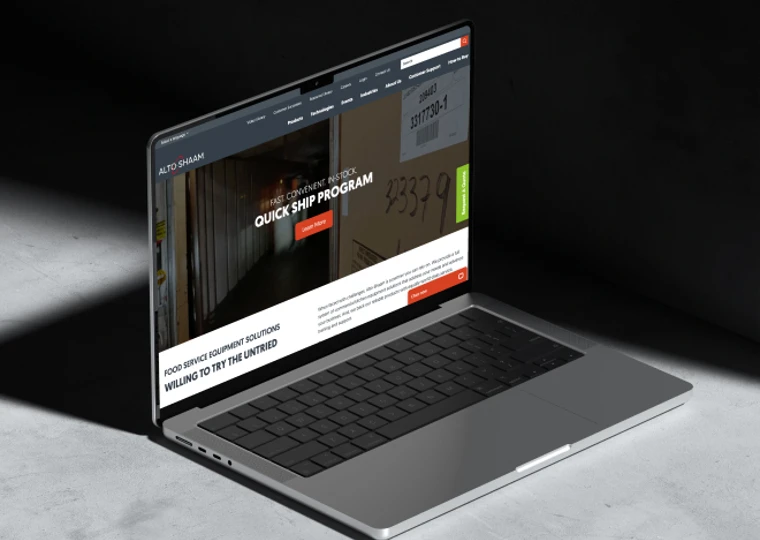
#1 Alto-Shaam
Alto-Shaam manufactures commercial kitchen equipment used by restaurants, hotels, and foodservice operations.
One challenge was helping buyers understand why their technology was different, particularly their cooking and holding systems.
By improving how products were explained online, the company was able to better communicate:
- How the technology works
- Where it fits in a kitchen operation
- What operational problems it solves
This kind of clarity helps buyers understand the product before speaking with sales.
For more on this check out the full case study for Alto Shaam here.
#2 Lakeside Manufacturing
Lakeside Manufacturing produces carts and equipment used in healthcare and foodservice.
The challenge was not product quality. It was product visibility.
Many potential buyers simply did not realize the breadth of solutions available.
By improving the way products were organized and explained online, the website began functioning as a product discovery engine.
Buyers could quickly understand:
- Different product categories
- Use cases
- Operational benefits
This significantly improves product awareness early in the buying process.
To read the full case study on Lakeside Manufacturing, go here.
Younger Buyers Prefer Self-Service Research
Another reason websites matter more today is that younger buyers prefer to learn independently.
Remember the stat from Gartner above?
Millennial buyers are especially likely to rely on digital research before engaging with sales.
This does not mean salespeople are disappearing. But it does mean the sales process has shifted.
Instead of starting with a sales conversation, (old school) buyers today want to educate themselves first.
That education happens through:
- Product pages
- Application examples
- Videos
- Case studies
- Technical insights
Most of which are on your site. Or at least they should be.
But here’s something to keep in mind. You don’t want to dump a bunch of content on your homepage. All that product information, all at once, is just as likely to turn prospects away.
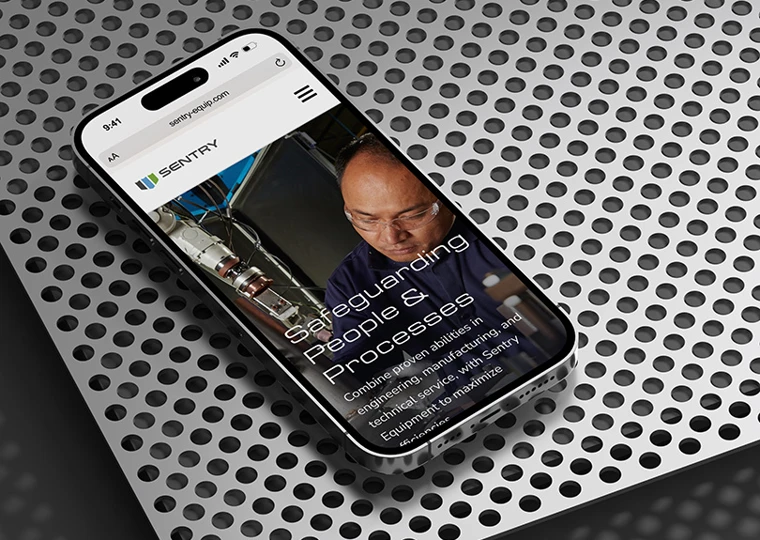
As Dave Coughlin, Director of Marketing at Sentry Equipment, puts it, “I don’t want to read through everything. I want to see it.”
His philosophy is that while product features remain available, the primary goal is to connect with the user visually to reflect the brand's identity rather than forcing them to navigate through excessive written content.
Content has to be spread out in more bite-sized pieces that draw your prospects deeper into the site.
Jocelyn Rasor, Director of Marketing at Lakeside Manufacturing, shares a similar sentiment.
In a recent interview, Rasor talks about sequencing information carefully to avoid overwhelming users. And not creating a “wall of text” that causes visitors to leave.
The Role of the Demo Has Changed
In addition to how prospects are researching changing, so too is the role of the demo.
Historically, demos introduced the product.
Today, demos often confirm a decision that buyers are already leaning toward. By the time a Millennial or Gen Z buyer requests a demo, they have usually already:
- Researched vendors
- Reviewed applications
- Compared capabilities
- Formed an early preference
In today’s world, the demo becomes the final validation step, not the beginning of the conversation.
The Takeaway
So, let’s sum this up.
The generational shift in B2B buying means your website is now the first salesperson in your organization.
And if it fails to do those things clearly, your prospects will simply move on.
In a world where buyers complete most of their research before contacting vendors, the companies that educate best often win.
And today, that education starts with the website.
We have been helping B2B brands improve their websites for over 25 years. Let’s talk about how we can help you.